Two days ago, I was talking to my mom about reading, and with a wistful sigh, she said, “it’s such an escape.” I wanted to ask to where, but I should have asked, “how did you get there?” Actually, reader, where were my mom and I? What did you see?
I ask because words can do two things: convey information or describe a scene. Sometimes both happen simultaneously, but these words I’m saying? They’re only sounds in your mind. You can’t see me in my room typing in my red chair until I’ve told you. This technique is very useful.
Pretend you’re reading a novel. The protagonist hugs their crush in school, and for two paragraphs, time freezes while the narrator voices the protagonist’s thoughts. A novel that only showed setting and action couldn’t voice character thoughts. Conversely, a novel frozen in time to explain character thoughts would lack visuals.
Words can convey information, describe time and place, or do both. Photo by Miguel Á. Padriñán on Pexels.com
Here’s a sample of what I mean. Note the italics versus bold. (1): To Andre, the worst kind of movies were old westerns. They were all the same: reckless hero with a sharp jawline, damsel in distress who has no opinions of her own, and endless montages of horseback riding.
(2): To Andre’s horror, a cowboy movie was playing when he returned to the physics classroom. He stood motionless by the door, his friends folding their arms or hunched forward.This is what they chose to watch?! He turned to leave but someone waved and pointed to an open seat.
In example (1), the narration is info-conveying. There are hints of visuals like the hero’s jawline, which you may have envisioned, but I’ve withheld knowledge of Andre’s location and actions—he is frozen in time. Example (2) animates Andre and the scene with phrases like “physics classroom” and “stood motionless.”
We are all skilled at info-conveying and descriptive writing. We’ve encountered the forms in essays and fiction. And yet, like other literary techniques, when we write, we tend to use the two forms unconsciously. Be aware of which form you’re using, and experiment with the ratio that you use them!
We, English speakers, share a habit that thrives regardless of our intelligence level. It’s a habit we tend to be unaware of.
I’ve been thinking about appositives lately, how they buffer a sentence’s pace, the way they succinctly add context to a noun. It wasn’t until I took a grammar course last year that I learned the term and its function, but ever since, I see it everywhere.
Purdue University’s writing resources hub, Purdue OWL, defines appositives as “a noun or pronoun — often with modifiers — set beside another noun or pronoun to explain or identify it.”
The Purdue OWL page for Appositives
The first sentence of this post contains an appositive. Here’s another example:
Barry, a choir singer, trilled a melody for Adrienne’s, his wife’s, birthday.
(The underlined is the appositive, which renames/adds context to the pronoun beside it.)
Notice how cutting “Barry” and “Adrienne” would still leave a functioning sentence. Only, you wouldn’t know the singer or his wife’s name.
You could swap what gets kept and cut, but without the context of “a choir singer,” one might assume “Barry trilled” meant “Barry played an instrument” (instead of “Barry sang”). Cutting “his wife’s” would leave Barry and Adrienne’s relationship ambiguous.
If you pay attention to yourself or others talking, you may find yourself using an appositive without thinking about it. In fact, you’ve likely used them before you knew what they were.
Listen close the next time you’re in a conversation. You or someone else may use a grammar technique you never even heard of! Photo by PNW Production on Pexels.com
How is this possible? It’s because speech is an act of mimicry. We learn how to talk from our parents and then from the people around us. While some things are region-exclusive, like a preference for saying pop instead of soda, other things are universal, like facets of grammar/speech.
You don’t need to know what an idiom is to recognize the phrase “it’s raining cats and dogs.” Likewise, many English speakers use appositives without knowing what an appositive is. Because appositives are a speech pattern, not exclusively a written one, even people who are illiterate use them.
I think it’s humbling that we share speech patterns like appositives, conscious of it or not. We all have a beating heart and a spongey brain. The similarities in how we write and talk are just more evidence that underneath our idiosyncrasies we’re built the same.
But if we’re built from the same parts, what makes us unique? Perhaps our uniqueness emerges from the differences in how we use those parts. As English speakers, we all use appositives, but the frequency each person uses them varies. We also make our each of our uses of appositives unique by choosing specific types.
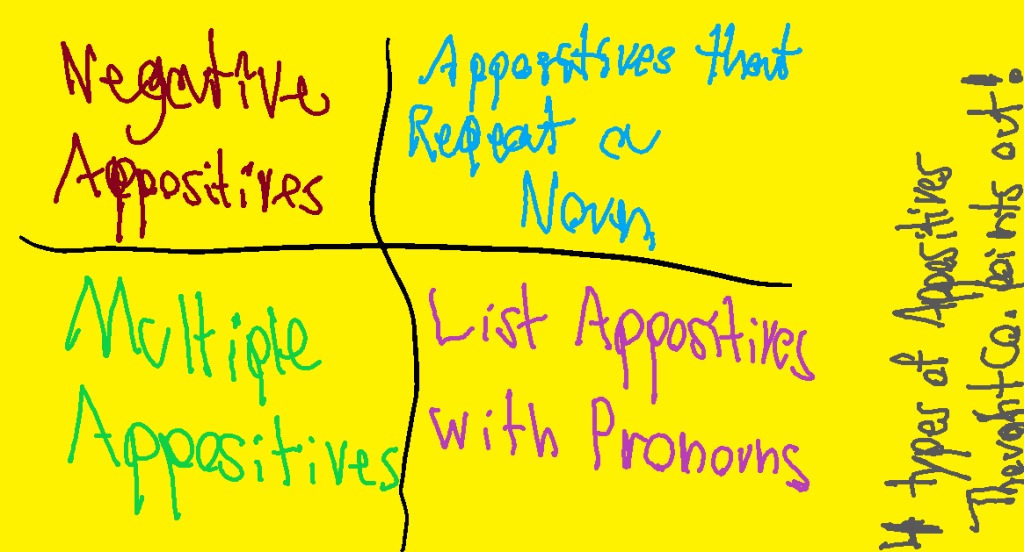
According to ThoughtCo., an education site whose writers have advanced degrees, appositives can do more than simply rename a noun with more context. They can also:
“Repeat a noun for the sake of clarity and emphasis” – Appositives that Repeat a Noun
Ex: Give Sarah my thanks, my thanks for her hospitality while we searched the hotel room.
“Identify what someone or something is not” – Negative Appositives
Ex: Teachers, rather than janitors, were expected to clean up a student’s mess in the classroom.
Appear beside a noun or pronoun two or more times – Multiple Appositives
Ex: Jimmy Strictland, manager at Pizza Hut, father of three girls, donated his extra paycheck to a Christmas charity.
Form a list that precedes a pronoun, usually the pronouns “all or these or everyone” – List Appositives with Pronouns
Ex: Taking out the trash before 9 PM, doing dishes before bed, quieting the TV while your parents are asleep—these tasks aren’t required when you live on your own.
ThoughtCo. points out more appositive variations as well, like nonrestrictive v. restrictive appositives and appositive adjectives.
There’s more too!
If you’re an English speaker, odds are you’ve used an appositive before, and you’re likely to use one again. In its ubiquity, the technique unites us, but what makes each of us unique is the variations in our usage. As ThoughtCo. proves, we have a lot of options.
What do you think of appositives? Have you heard of the technique before? How will you use the various forms in your own writing?
Constituents are parts that make up a whole. Nouns, verbs, and other parts of speech combine to make phrases. A single phrase or a collection of phrases constitute a clause, and a clause or a collection of clauses form a sentence.
This is where things get interesting. Ever wonder why English speakers of various backgrounds say the same lines, like “more power to you,” “the upper hand,” and “let’s split up?” It’s because, unbeknownst to us everyday speakers, every facet of written and spoken language is a phrase. Some phrases are more common than others.
Doesn’t it fill you with Christmas spirit?
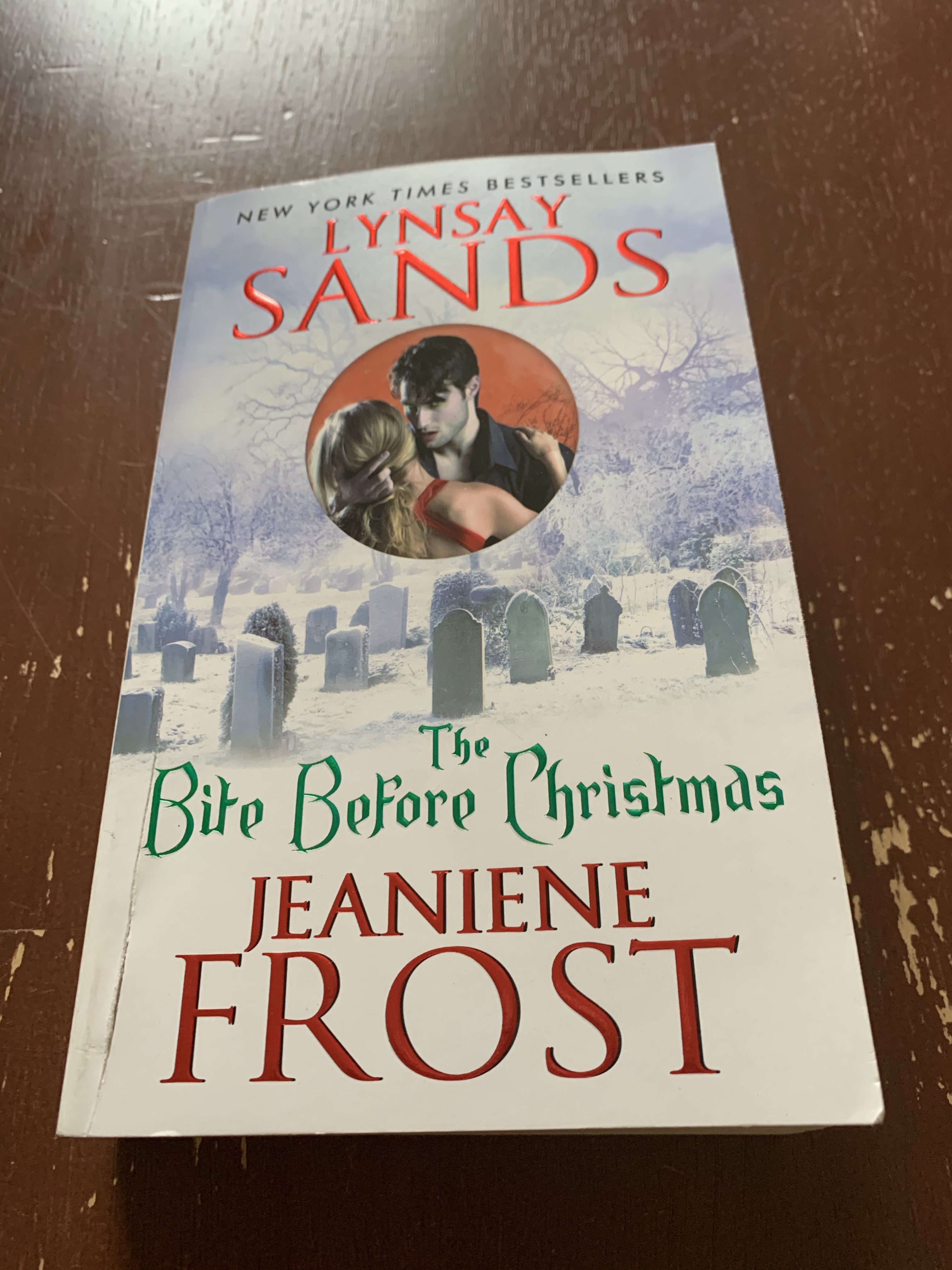
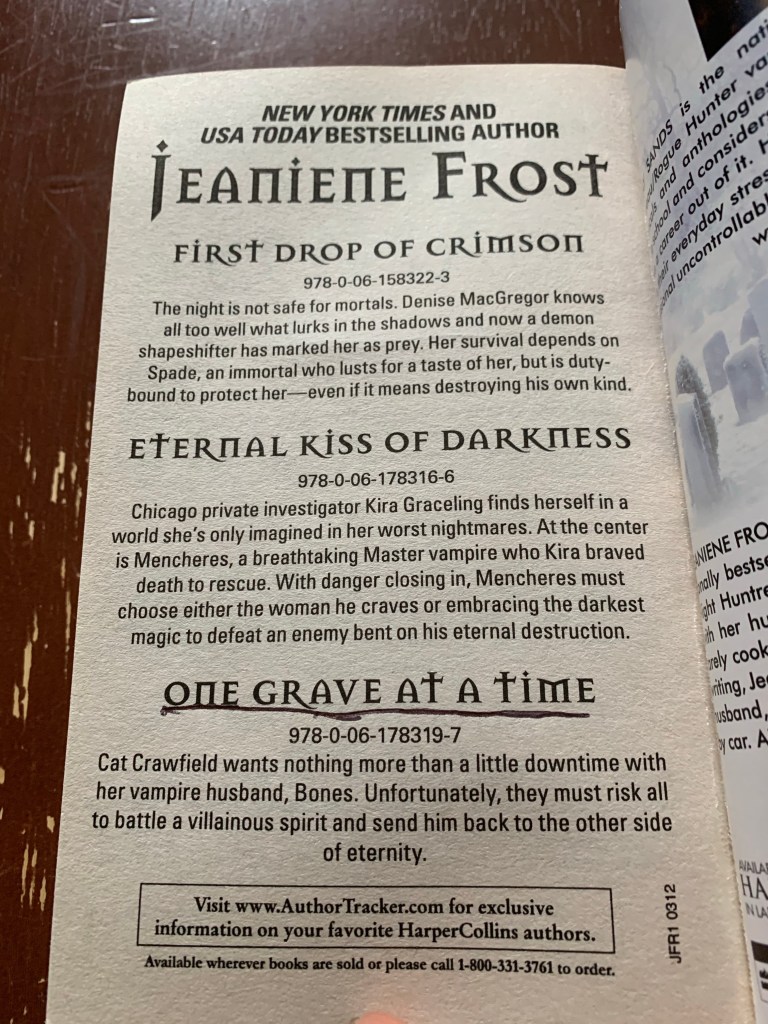
Enter Lynsay Sands and Jeaniene Frost’s The Bite Before Christmas. Cheesy title aside, it has some great examples.
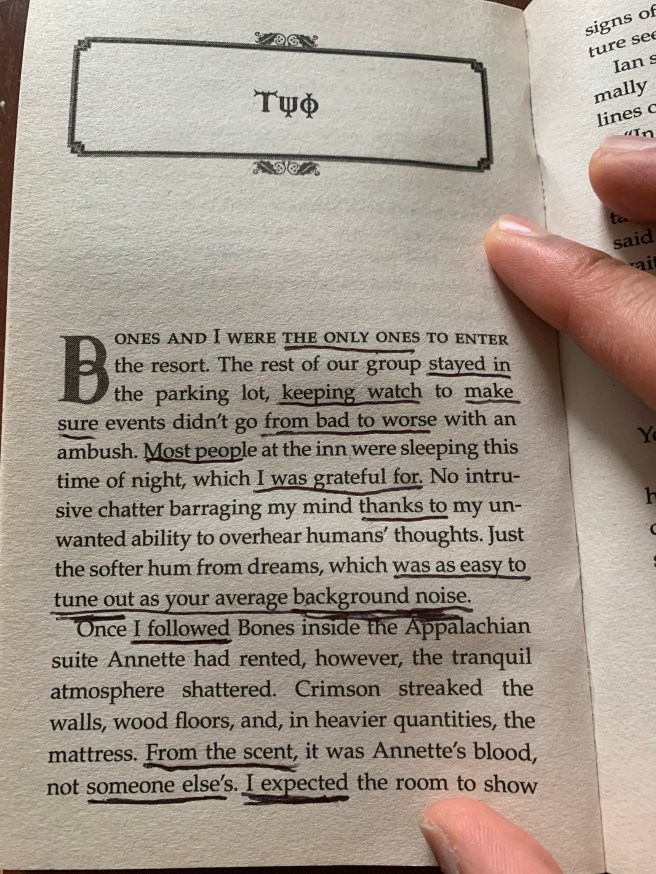
Everything underlined is a common phrase. Notice “tune out” and “background noise” have a thicker marking. They are embedded in a correlative conjunction: “as easy…as”
“The only ones,” “stayed in,” “keeping watch.” These phrases aren’t as strong or well known as proverbs, but I would argue they’re more important. They are bridges to communicate meaning. If need be, they can be swapped for similar bridges to tweak the meaning or alter the cadence.
“Keeping watch” can be swapped for “looking out.” “Stayed in” for “guarded.” “The only ones” for “the only two.”
But these phrases aren’t Sands’s or Frost’s creations. The originator is untraceable. They could be us collectively, operators of the English language. How often have you said, “Me and ___ were the only ones to ___.” or “The only ones who got away with it were ___.” Phrases are underappreciated; they don’t get the acclaim a proverb like “the pen is mightier than the sword” does. Still, they are absolutely necessary, for speakers and for writers.
So how can you be original if it’s all been said before? Easy. Take something known, modify it a bit, then display it like new.
This punThis punAnd this pun Modifying common phrases is a great way to draw interest in the text, be it in a title, sentence, or paragraph. But done haphazardly and it’ll create jokes like these. Hit or miss.
Teju Cole has a great example of phrase manipulation in Red Shift, an essay from his essay collection, Known and Strange Things. He alters the phrase “the one that you like best.”
“Perhaps your favorite film isn’t the one that you like best but the one that likes you best.”
By extending the common phrase, adding another phrase to it, Cole puts a spin on what would be a typical statement.
Writers of all kinds utilize phrases to strengthen the meaning of their words. In Canadian rapper k-os’s song, Spraying My Pen, rapper Saukrates uses several common phrases in his verses.
“Beggin’ my pardon, pardon my French but I leave you starvin’.”
“Gone til November (…)”
“(…) in the wrong department”
“Next stop is (…)”
While the last three lines buoy the verses, the first is an example of phrase manipulation. “Beggin’ my pardon” and “pardon my French” are two common phrases in one line, and they share a homonym in “pardon.” It’s effective; lyrically, it’s cool to hear the same word twice with different meanings.
To make unique or unheard of phrases requires good judgement and creativity. Phrases are context sensitive, after all. As Steven Pinker says of idioms in The Sense of Style, I say with phrases: the best use of a phrase is to put a new spin on something mundane.
Most of my writing of late has been dedicated to my workshop story, Autumn Festival. This one by far looks to be my best work, containing a protagonist that is round and dynamic and static characters that, while sometimes flat, have personalities that excite at every dialogue line. Upon completion it will be about ten pages, 1.5 space, times new roman. It’s certainly a contest contender, especially if it is entered in a character-centric competition.
Other writing ventures include starting my sci-fi story (which is exciting, I’ll be using a particular concept I’d been saving for years) and developing my writing style. Style is something I’ve been obsessed with. A magnificent obsession. I’m experimenting in blending poetry and prose into something readable for poets and non-poets, all the while I am a non-poet. My tests are in their infant stages, but upon completion the results will be beautiful.
My thinking is, words are time-consuming. Conversely, visual arts can be scanned at a glance: in seconds someone could peek at a picture, look away and tell a stranger what they saw. Words need to be read, one by one, and after the mental or verbal pronunciation of the words, meaning must be deciphered. Reading is certainly longer than looking at a painting. However, time spent reading can either be boring, or a roller coaster of fun. Reading word-to-word has a flow that isn’t immediately discernible, unless it is a poem using rhymes or a story with literary devices (alliteration, consonance, assonance, etc.). Many who listen to poetry delight in its rhymes and imagery, the words having an audible cadence short stories lack. My thinking is, if there is some way to combine the cadence and literary devices of poetry whilst telling a narrative, without following the line-by-line stanza format, I could create an enticing style that even a non-reader would delight in picking up to read.
“Love demands expression. It will not stay still, stay silent, be good, be modest, be seen and not heard, no. It will break out in tongues of praise, the high note that smashes the glass and spills the liquid. It is no conservationist love. It is a big game hunter and you are the game. A curse on this game. How can you stick at a game when the rules keep changing? I shall call myself Alice and play croquet with the flamingoes. In Wonderland everyone cheats and love is Wonderland isn’t it? Love makes the world go round. Love is blind. All you need is love. Nobody ever died of a broken heart. You’ll get over it. It’ll be different when we’re married. Think of the children. Time’s a great healer. Still waiting for Mr Right? Miss Right? and maybe all the little Rights?”
This idea isn’t new, but it also isn’t common or popular. Only in certain circles is it prominent. Namely, the literary fiction genre (AKA, the “genreless genre”). Jeanette Winterson is known for this poetry-prose style, she uses it in her book Written on The Body. Within the first couple of pages she has a barrage of words that utilize personification, anaphora, metaphors and more. Besides frequent usage of imagery and other literary devices, it contains narration like in a short story. Winterson manages to capture so many messages in a single paragraph, her writing is just plain fun to read.
If I could interview Winterson, I’d ask how long it took to craft this paragraph of hers, and what inspired her? How many rewrites did she have? Once I finish my workshop story and get it contest ready, I will be creating passages of a similar fashion. Of course, it’ll be done in my own style.




 The Fiction Writer