
Subverting Expectations on The Visionary Level

Life Is Larger Than What We See In Our Heads

If I said to you, “Look! It’s a trucker!” odds are, before you turned your head to look, your mind would conjure the image of a male. You’d be less likely to imagine a female tricler, or a trucker with vitaligo, or transgender trucker, even though all those things are valid and exist in the real world.

In the real world, we walk around with subconscious biases for how things ought to look and sound, and this may be based on how things commonly are, or based on stereotypes that are far off from reality. Regardless, the biases exist within us and effect our expectations and therefore how we interact with the world.

So when we see the unexpected, say, a female trucker, we are momentarily shocked—we’re put in a situation we aren’t usually in, which forces us to be in the present moment. There’s no subconscious pattern created for novel situations. And following said experience, we’re more likely to remember it since required more brain power to process and navigate.

The Unexpected Can Enhance Your Writing

The principle of the unexpected—of people and situations that don’t neatly fit into our common ideas—this principle can be used when crafting stories. Concepting a story where a belly dancer is revealed to be a man, or a story where the setting is described as a house but is revealed to be a dungeon—these stories shock readers, make the narrative more salient in their minds. By practicing your skills as a Visionary, someone who plays around with the various ways a single story can be presented, you, too, can create plots that hook readers.

If in a story I say there’s a waitress, a generic image will come to mind. But if I have a story set in China with a Muslim waitress wearing a hijab, you’ll see something more vivid. And uncommon. Questions will come to mind: how is the woman speaking Chinese? Was she born there? How unique!

Subverting expectations can have splendid results. When creating a plot for your next story, try experimenting with this.
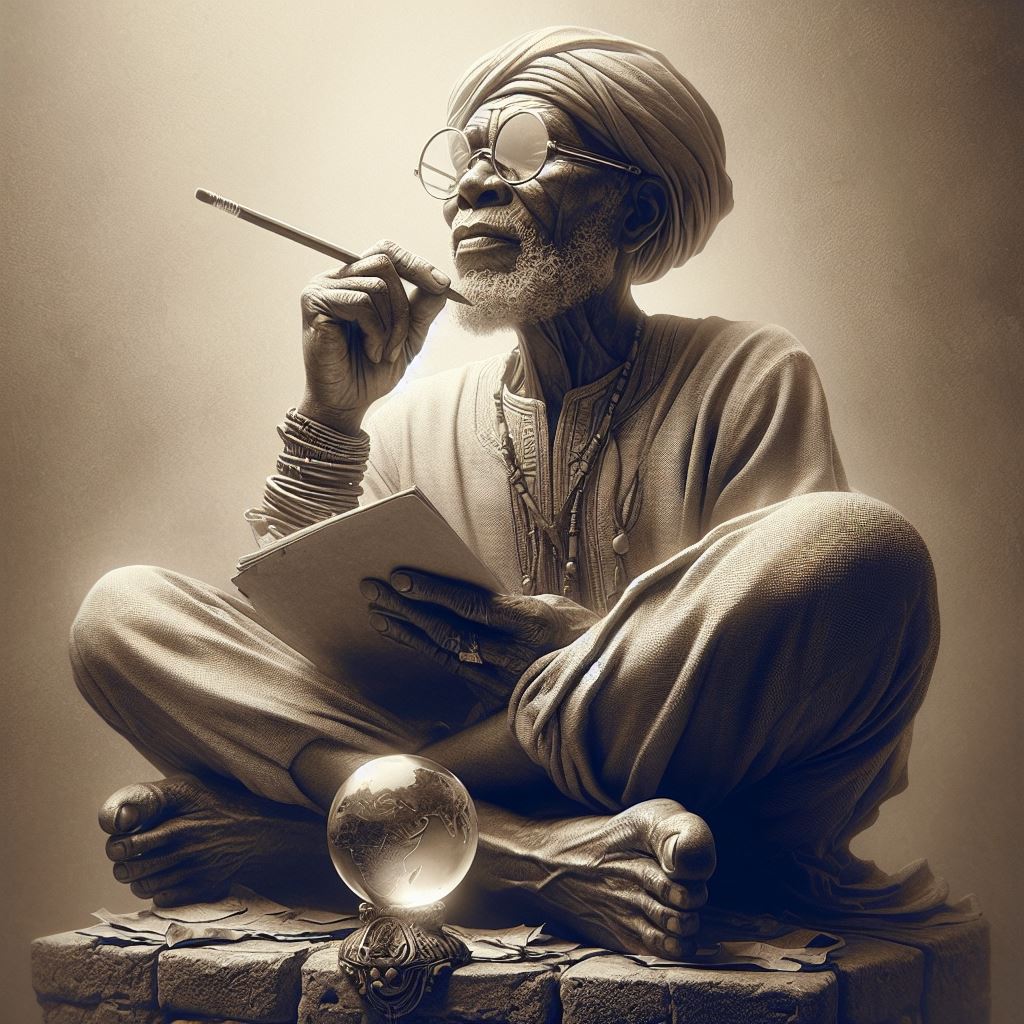
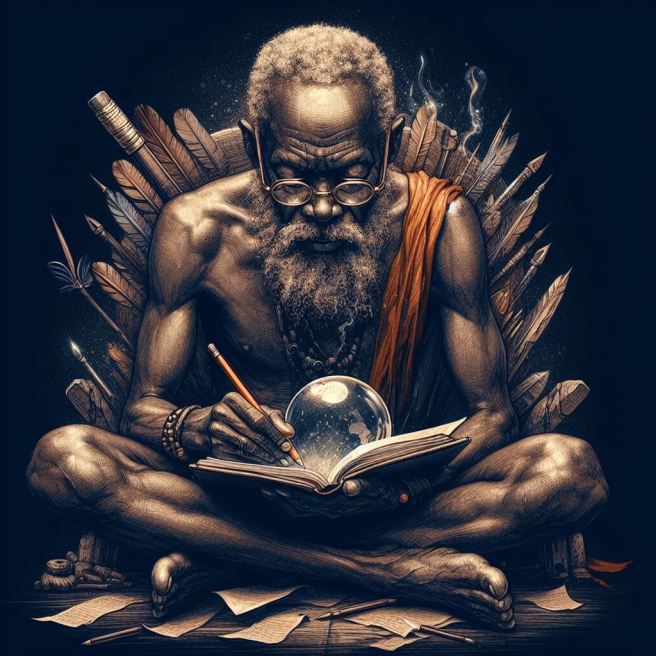
The Visionary and The Writer

The Visionary. To me, a Visionary is someone who sees the entire picture at once and can intuit numerous, distinct ways of presenting it. As a writing professor in college put it, before you begin writing draft two of a story, you should reflect on the story within the story.

Is such-and-such really a short fiction about a home invader, or is it actually a story about a negligent father who suffers for not paying attention?

Also, consider the scenes we don’t get to see in a character’s life. There is the story the reader has privilege to experience, and then there are events that characters experience (for them in turtle-paced real time) but we don’t see or sometimes even hear about.

An example would be a story that chooses to show a character’s morning routine, their commute to work or school, a scene while their at work, and then it’ll skip to the next day, without showing their commute home or what they did that night.

And even if we got scenes in a character’s home, their commute, work/school, their commute back home, and dinner, those scenes take place within a few pages, not several hours like for us in the real world.

AI-Created with Microsoft Copilot

A Visionary looks at these reader-hidden details and can add them to a story to enhance it. A Visionary can alter or cut scenes. A Visionary is an excellent developmental editor. Essentially, a Visionary is one who practices the art of plotting, outlining, character creation, and theme.

Visionaries are necessary for earth-shattering storytelling. A favorite example of mine is season 3 of the Marvel show Daredevil. Not only did each episode leave me hooked, but also the conclusion was unpredictable. I also felt this in the prison story arc in the novel “Live By Night” by Dennis Lehane.

AI-Created with Microsoft Copilot

The Visionary paints the most excellent blueprint. Elegant. Immaculate. But it is the Writer who assembles the conception. Brick by brick. Word by word. And while the Writer must scoot up close and only see pieces of the blueprint at a time, only the Writer can put the house together, can add the style. The literary devices. The sentence length.

An example would be the short stories and microfiction of Lydia Davis. They often have simple plots, but it’s her masterful sentences that makes readers chuckle or awe at her work.

To be a fiction writer, one must balance visionary thinking and granular thinking. Be sure to find joy in both.

Goodbye, Tarantula

            Tarantula skittered from the snowy window into the dust-ridden bedroom. She paced left and right. She could sense the termites eating away at the bedframe, and the carpet beetles shimmying out the closet. But overlapping those signals was the mouse family’s squeaks: the voice of a mother comforting her children from the hailstorm. Tarantula left the room.

* * *

            After several hours exploring the nooks and crannies of the house, Tarantula found a cubby-hole on the floor beside the kitchen sink. She crawled in and allowed herself to get comfortable.

* * *

            The footsteps of an ant colony. She detected a line of them trooping past her. She swiped them into her mouth without hesitation. They scattered, and she lunged after a few more.

            When they were gone, she remained standing. Still as a stone.

            Minutes passed. Then she crawled back into her den.

* * *

            A high-pitched screech alerted her. It was followed by a second, crackly voice. She exited the den. The sound was laughter. Tarantula traveled to its location.

            She entered the living room and found, on the knotted carpet, a turtle lying on its back, and two ravens standing before it.

            “You buffoon!” One of the ravens said. “What, did you think you could run from us?”

            The living room was bustling with traffic. Tarantula could sense it. The roaches congregating under the furniture. The flies hovering by the molded wallpaper. She saw a stinkbug stroll past the turtle and the ravens.

            “If only we could rip you out of your shell,” the raven said.

            “Had our beaks been sharper,” the other raven said. “We’d pierce that meaty head of yours.”

            One of the ravens turned its gaze directly at Tarantula. Tarantula stood motionless. For minutes. Then she skittered back into the kitchen, back into her den.

* * *

            From a window, white light poured into the kitchen. Hail was replaced by snow flurries. From a hole in a tree, the cheerful chirps of sparrows. Remarks at the prettiness of the snow. The desire to fly out among it.

            Tarantula could sense this. Just as she could sense the presence of the ravens, still somewhere in the house. Just as she could deduce the turtle was still on its back.

* * *

            Hours passed before Tarantula left her den. When she did, she went straight to the living room, and flipped the turtle right side up again. At this, the turtle beamed.

            “Golly, thanks!” the turtle said. “Thank you so much! I thought I’d be scrambled like that forever!”

            Tarantula stood motionless. The snow continued outside the house. Tarantula turned. The turtle tried to mouth something, but couldn’t think of more to say.

            A blast of wind sounded and the turtled leaped into its shell. Angry caws echoed in the room. Then silence.

When the turtle poked its head out, Tarantula and the ravens were gone. The turtle stood and walked toward the open window.

            “Goodbye, Tarantula.”

The Joyous Islands of Exposition and Narration (or, You Can’t Swim Through Description Forever)

Looking at my current short story projects, I’ve realized some are all bite and no bark. In a few of these stories, I thrust my protagonist into action on page one, and other than their internal reactions to what’s going on, I don’t showcase their reflection on the past or their hopes for the future; nor do I show their abstract thoughts of the present. Ah, Dialogue and Description, you wiley beasts—you’ve overtaken my prose!

All is well. Well, all will be well. I’m going to go back and, between some paragraphs, add character thoughts. If you’re in a similar boat, I’d advise you add some exposition and narration too.

Here’s a good reason why. I’ve got a story going where my protagonist ends up in another world. Pretty crazy, right? But right now I just have him walking around and interacting with stuff, instead of using narration to freeze time and have him react to the strangeness of things—what would his mother think if she were there? And oh, what is his mother like? Even if we never met her, exposition like this enriches a story, and taking the time to narrate such details gives healthy space between bustling description or long stretches of dialogue.

I’m gonna go make these changes. Happy writing!

The Nine Billion Names of God – Short Story Review

The Nine Billion Names of God is a short story that speculates God’s purpose for mankind and how technology intersects with spirituality. With a total of three scenes and no particular protagonist (rather, we hop from 3rd person limited over various scientists as they interact with Tibetan monks), the author Arthur C. Clarke makes it clear that rather than character growth, the story’s events are what readers should focus on.

Throughout the story you’ll gain a sense of wonder at the monks and their planning capabilities, culture, and history, even if they tend to be vague and cocky. For instance, they gladly explain their goal with the device known as the Mark V computer—to discover and transcribe all of God’s names—but offer no explanation as to how they can tell what a “real” name is compared to other names. As you learn about the Mark V’s progress, you’ll be introduced to a captivating twist, one that will make you question the cosmic-spiritual rules of our own reality.

While character development is nonexistent, character is very present, and I’m certainly grateful for it. The monks are like poker players holding secret knowledge, and the scientists act as clueless as we feel. One scientist, who doubles as a salesman, questions just how is it that the monks know how to handle technology like the Mark V.

Another scientist name George is bored working in the monk’s temple, is anxious to leave, but his commitment to his job shows us some humanity in contrast to the stoicism of the temple-goers. There’s even humor to be found in his critiques of the monks. And in the nick of time, the scientist named Chuck arrives in the story to provide a sense of adventure.

Prose-wise, this story is written in colloquial, easy-to-follow English with a healthy amount of dialogue and narration—it’s thin on description, but objects and setting details aren’t overly important in the narrative. The lore of the story unfolds at a quick pace, thanks to a time skip, and the rules of spirituality remain consistent and left open just enough for readers to fill in some blanks with their imagination. My one complaint is that it’s never stated why God has multiple names. What, does he have a lot of nicknames or something?

Overall I think this story does an excellent job getting readers thinking. What is our purpose in the universe? Is technology a part of it? Are we even supposed to reach our purpose? If questions like these interest you, or if you like science, philosophy, or religion in general, this is the story for you.