
Hypnagogia — A Reflection

Perhaps it’s not the secret sauce; perhaps it’s the reliable wheat burger bun: handy, reliable, essential, but you’re too focused on the burger and cheese to notice it.
“The plan must go wrong.” I first noticed this trope during a rewatch of Christopher Nolan’s TENET, one of my favorite movies. There’s a heist planned, and before he executes it, the protagonist recites to his teammate all the details of what he will do. In reality, this is Nolan’s way of informing us, the audience.
The first few steps of this plan go smoothly. But then, suddenly, he’s ambushed! On top of this, the artifact he came to get was destroyed.
After I noticed this trope in TENET, I realized it’s used all the time in books, films, and shows. It’s handy for keeping viewers on their toes. Imagine how boring a story would be if every single thing the main character said came true? Fiction should be unpredictable, like life.
If I said to you, “Look! It’s a trucker!” odds are, before you turned your head to look, your mind would conjure the image of a male. You’d be less likely to imagine a female tricler, or a trucker with vitaligo, or transgender trucker, even though all those things are valid and exist in the real world.
In the real world, we walk around with subconscious biases for how things ought to look and sound, and this may be based on how things commonly are, or based on stereotypes that are far off from reality. Regardless, the biases exist within us and effect our expectations and therefore how we interact with the world.
So when we see the unexpected, say, a female trucker, we are momentarily shocked—we’re put in a situation we aren’t usually in, which forces us to be in the present moment. There’s no subconscious pattern created for novel situations. And following said experience, we’re more likely to remember it since required more brain power to process and navigate.
The principle of the unexpected—of people and situations that don’t neatly fit into our common ideas—this principle can be used when crafting stories. Concepting a story where a belly dancer is revealed to be a man, or a story where the setting is described as a house but is revealed to be a dungeon—these stories shock readers, make the narrative more salient in their minds. By practicing your skills as a Visionary, someone who plays around with the various ways a single story can be presented, you, too, can create plots that hook readers.
If in a story I say there’s a waitress, a generic image will come to mind. But if I have a story set in China with a Muslim waitress wearing a hijab, you’ll see something more vivid. And uncommon. Questions will come to mind: how is the woman speaking Chinese? Was she born there? How unique!
Subverting expectations can have splendid results. When creating a plot for your next story, try experimenting with this.
The Visionary. To me, a Visionary is someone who sees the entire picture at once and can intuit numerous, distinct ways of presenting it. As a writing professor in college put it, before you begin writing draft two of a story, you should reflect on the story within the story.
Is such-and-such really a short fiction about a home invader, or is it actually a story about a negligent father who suffers for not paying attention?
Also, consider the scenes we don’t get to see in a character’s life. There is the story the reader has privilege to experience, and then there are events that characters experience (for them in turtle-paced real time) but we don’t see or sometimes even hear about.
An example would be a story that chooses to show a character’s morning routine, their commute to work or school, a scene while their at work, and then it’ll skip to the next day, without showing their commute home or what they did that night.
And even if we got scenes in a character’s home, their commute, work/school, their commute back home, and dinner, those scenes take place within a few pages, not several hours like for us in the real world.
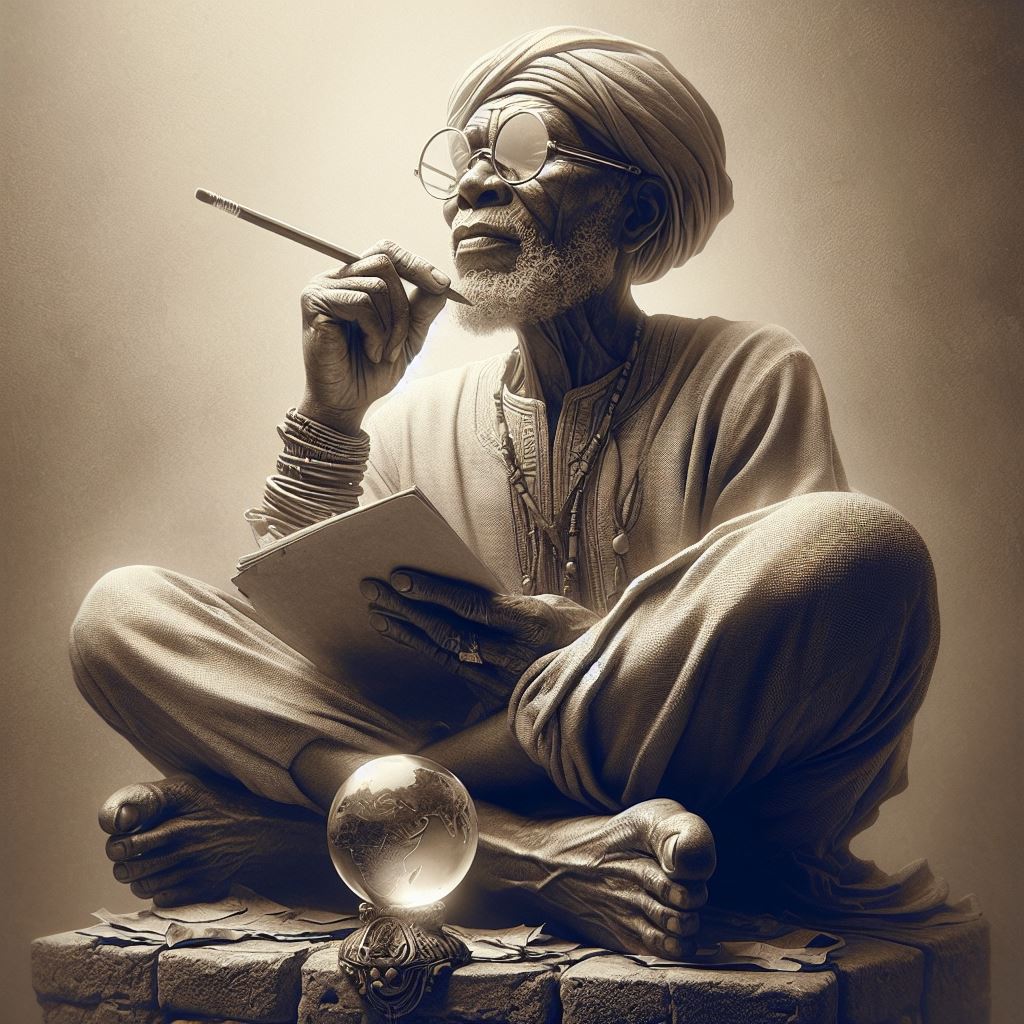
A Visionary looks at these reader-hidden details and can add them to a story to enhance it. A Visionary can alter or cut scenes. A Visionary is an excellent developmental editor. Essentially, a Visionary is one who practices the art of plotting, outlining, character creation, and theme.
Visionaries are necessary for earth-shattering storytelling. A favorite example of mine is season 3 of the Marvel show Daredevil. Not only did each episode leave me hooked, but also the conclusion was unpredictable. I also felt this in the prison story arc in the novel “Live By Night” by Dennis Lehane.
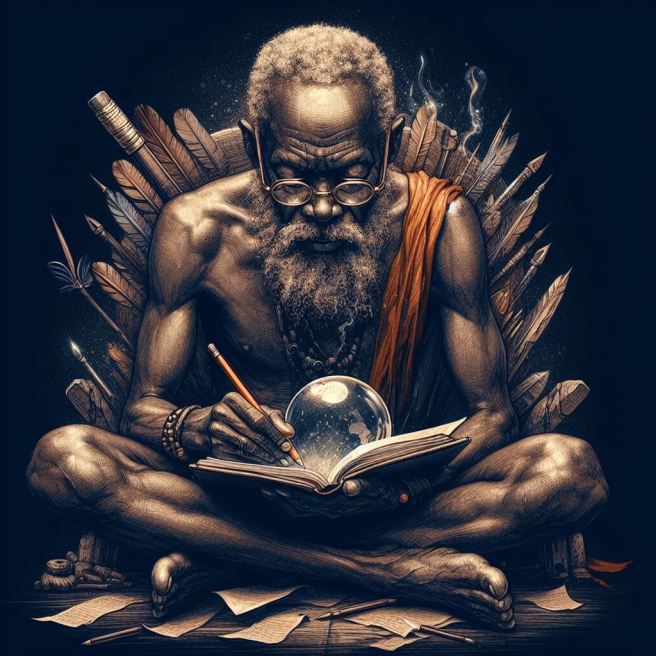
The Visionary paints the most excellent blueprint. Elegant. Immaculate. But it is the Writer who assembles the conception. Brick by brick. Word by word. And while the Writer must scoot up close and only see pieces of the blueprint at a time, only the Writer can put the house together, can add the style. The literary devices. The sentence length.
An example would be the short stories and microfiction of Lydia Davis. They often have simple plots, but it’s her masterful sentences that makes readers chuckle or awe at her work.
To be a fiction writer, one must balance visionary thinking and granular thinking. Be sure to find joy in both.
When I was in Temple University, I was part of a campus lit mag called Hyphen. It published annually. Meetings were weekly, and anyone who attended was considered an editor, able to cast a vote for the acceptance or rejection of a piece. Pieces included art, poems, and short stories, and while editors could read in advance, time was given during each meeting to review a piece before casting a vote. Hyphen had a fun and simple formula, one fruitful for socializing and for keeping the creative juices fresh. The submissions we reviewed enlightened me on new ways to use prose, as did hearing the critiques from my fellow members. And the memes we’d share amongst each other? Priceless.
But even at the time, despite my love for Hyphen, I knew more could be done. For example, we could’ve had guidelines on how many of each submission type we’d accept. Regarding what got put in the magazine, we pretty much went with what got the most votes, and poetry was super popular; little room was left for short stories. We also could’ve had punctuation, formatting, and style guidelines, maybe even a word count, to keep pages visually consistent. At the end of the semester, once all the pieces are selected, editors transition from voting to grammar repair. Having a style guide would give editors more to do, more skills to practice, and also more to put on a resume.
But this is my dream club, right? So anything goes? Cuz I’d LOVE to have workshop sessions, for editors and potential submitters for their poetry, prose, and artwork submissions. Imagine a feedback and critique session, with the chance to submit again later on.
How about having themed issues of a lit mag? That would be cool. Open mic sessions to perform/practice poetry. Drawing sessions. Writing sprints.
Oo! Here’s a good one. Analyzing grammar in excerpts of prose or poetry, picking paragraphs apart for literary devices and syntax tricks like a ravaging grammar wolf🐺
There could even be sessions where we read short stories and analyzed them on the macro scale—plot, character, theme instead of writing style.
A writing club that combined all these things would be the best writing club ever. Who knows. Maybe I’ll be the one to start it…
 The Fiction Writer