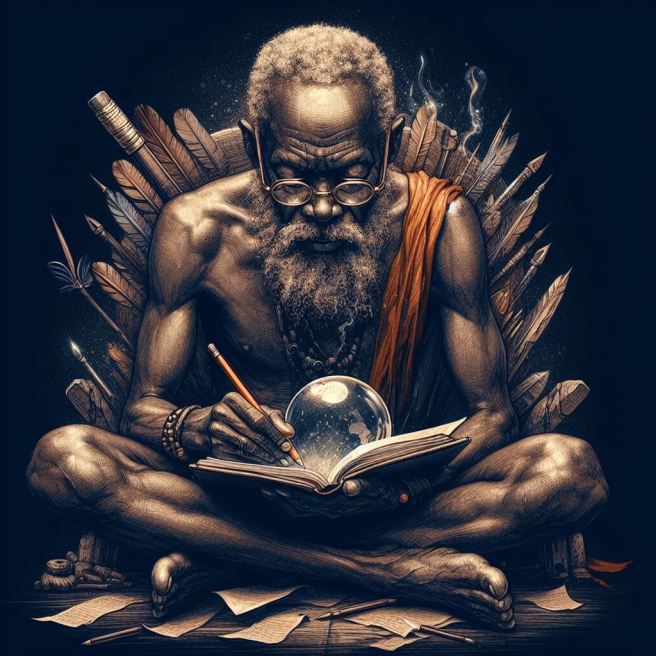
The Pros and Perils of the Pantser

One thing I’ve learned recently, during my practice of writing one flash fiction every week, is that being a “pantser” comes with its own unique challenges. For those who don’t know, a pantser is a writer who begins a story without outlining it. They are the opposite of plotters, who always pre-plan their stories before writing it.

On a given day being a pantser, my word-inventory might be strong: I’ll feel warmed up to create beautiful descriptions or narration, with stunning literary devices. But without a vision of where I’m taking my story, I cannot write a single sentence, unless I want a speculative piece, maybe.

So I sit at my page and generate visions on the fly—how many characters to include, what setting, theme, etc.—and that eats up writing time. I’ve had quick brainstorm sessions before, don’t get me wrong, and being a pantser feels more free than being a plotter, having to follow the rules of a rigid outline. But if I brainstorm sloppily, I also risk gluing cliches together to make a story.

Here’s an example:

(Bland brainstorm session) A cigarette dropped in woods causes fire.

(Effective brainstorm session) A blow-torch is used in woods to reveal secret bunker under the foliage.

To get that uniqueness takes more mental effort. But if you make it, it’s definitely worth it.
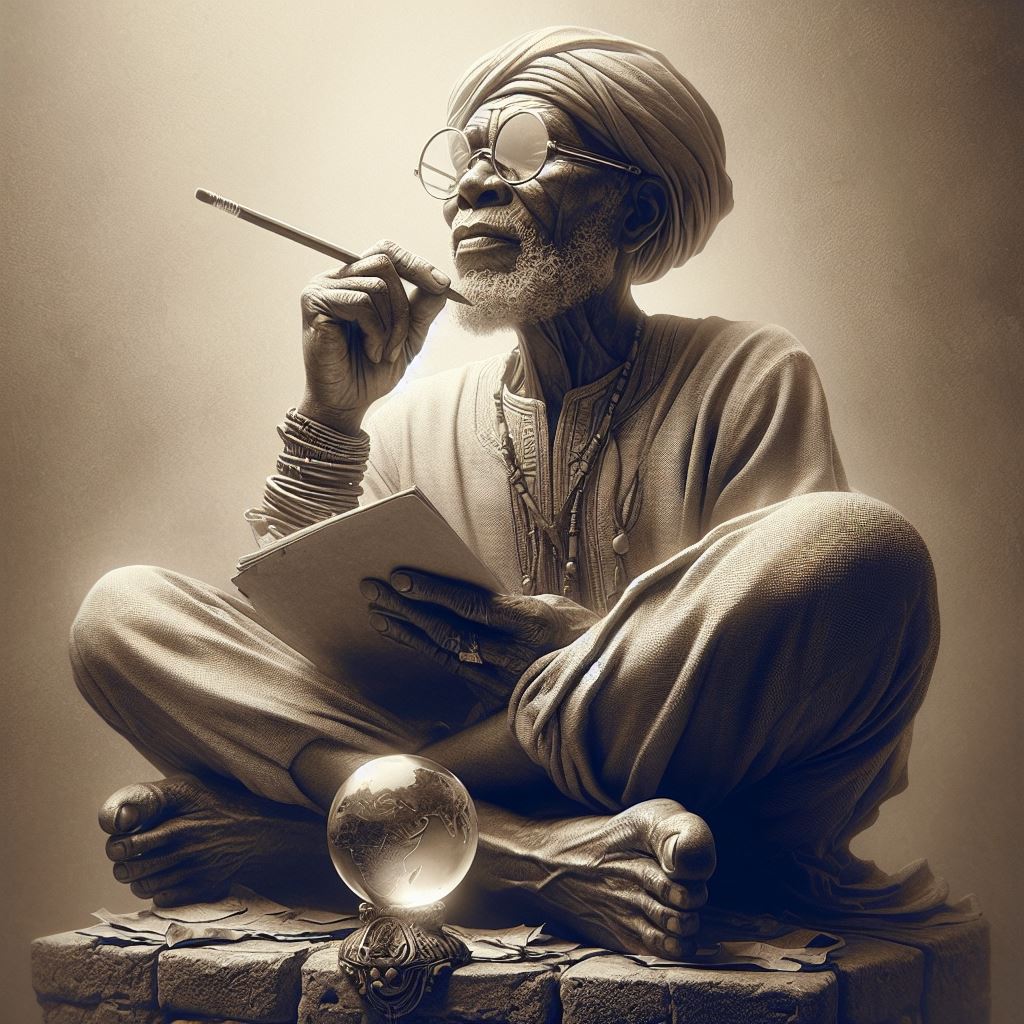
The Visionary and The Writer

The Visionary. To me, a Visionary is someone who sees the entire picture at once and can intuit numerous, distinct ways of presenting it. As a writing professor in college put it, before you begin writing draft two of a story, you should reflect on the story within the story.

Is such-and-such really a short fiction about a home invader, or is it actually a story about a negligent father who suffers for not paying attention?

Also, consider the scenes we don’t get to see in a character’s life. There is the story the reader has privilege to experience, and then there are events that characters experience (for them in turtle-paced real time) but we don’t see or sometimes even hear about.

An example would be a story that chooses to show a character’s morning routine, their commute to work or school, a scene while their at work, and then it’ll skip to the next day, without showing their commute home or what they did that night.

And even if we got scenes in a character’s home, their commute, work/school, their commute back home, and dinner, those scenes take place within a few pages, not several hours like for us in the real world.

AI-Created with Microsoft Copilot

A Visionary looks at these reader-hidden details and can add them to a story to enhance it. A Visionary can alter or cut scenes. A Visionary is an excellent developmental editor. Essentially, a Visionary is one who practices the art of plotting, outlining, character creation, and theme.

Visionaries are necessary for earth-shattering storytelling. A favorite example of mine is season 3 of the Marvel show Daredevil. Not only did each episode leave me hooked, but also the conclusion was unpredictable. I also felt this in the prison story arc in the novel “Live By Night” by Dennis Lehane.

AI-Created with Microsoft Copilot

The Visionary paints the most excellent blueprint. Elegant. Immaculate. But it is the Writer who assembles the conception. Brick by brick. Word by word. And while the Writer must scoot up close and only see pieces of the blueprint at a time, only the Writer can put the house together, can add the style. The literary devices. The sentence length.

An example would be the short stories and microfiction of Lydia Davis. They often have simple plots, but it’s her masterful sentences that makes readers chuckle or awe at her work.

To be a fiction writer, one must balance visionary thinking and granular thinking. Be sure to find joy in both.

How to Say Something Unique – The Parts of Speech

One of my favorite parts of writing is creating awesome sentences. To really get the reader unexpecting on each line—to the point where they’re hooked cuz they just HAVE to read the next line—you have to break some conventions.

Here’s a convention: the parts of speech. Nouns are nouns, verbs are verbs, etc. But it doesn’t have to be this way.

I mean, you could sneak inside a building, but you could also patience your way to the front of the line. And you get the same results—one’s just more fun better than the other.

Similarly, you could skip school, but you could also skip eating (this second example uses what’s called a gerrund, which is when an “-ing” verb functions as a noun).

There are many parts of speech and many ways to mess around with them. What will you come up with?

The Joyous Islands of Exposition and Narration (or, You Can’t Swim Through Description Forever)

Looking at my current short story projects, I’ve realized some are all bite and no bark. In a few of these stories, I thrust my protagonist into action on page one, and other than their internal reactions to what’s going on, I don’t showcase their reflection on the past or their hopes for the future; nor do I show their abstract thoughts of the present. Ah, Dialogue and Description, you wiley beasts—you’ve overtaken my prose!

All is well. Well, all will be well. I’m going to go back and, between some paragraphs, add character thoughts. If you’re in a similar boat, I’d advise you add some exposition and narration too.

Here’s a good reason why. I’ve got a story going where my protagonist ends up in another world. Pretty crazy, right? But right now I just have him walking around and interacting with stuff, instead of using narration to freeze time and have him react to the strangeness of things—what would his mother think if she were there? And oh, what is his mother like? Even if we never met her, exposition like this enriches a story, and taking the time to narrate such details gives healthy space between bustling description or long stretches of dialogue.

I’m gonna go make these changes. Happy writing!

Sensory Sentences Exercise #1

Using Sensory Words to Create Vivid Scenes

(1.

Silver wax oozed from the crevice of the door, clammed shut thanks to my flamethrower.

(2.

It was my mistake to guide the children to the roaring music hall, where bellows hoisted violin strums on their backs and where the madness drowned out the screams of the 2nd graders.

(3.

Alix trained hard, for months, chucking rocks to build biceps, dismantling Legos to construct meteorite wrists, til he was finally bulked and poised with a pencil to launch the final bullet to his Chemistry exam, the impact starting a fire that smelled old and musky, but the completion of his mission placed a buttery taste on his tongue.

(4.

The grilled cheese sizzled on the pan, murmuring secrets only the flies could hear. Its greased surface threw white back at the light bulbs; oil droplets popped up, fell down, slid like ice atop the pan and beside the sandwich. The bread was tan, black along the sides, and carried a charring-hot taste—not because it was cooking but because red pepper seeds were peppered throughout the melty orange cheese. It carried the smell of a quesadilla.

(5.

His phone twinkled from the hill’s bottom, guiding me like the north star to safety from this freezing forest.