The Visionary and The Writer

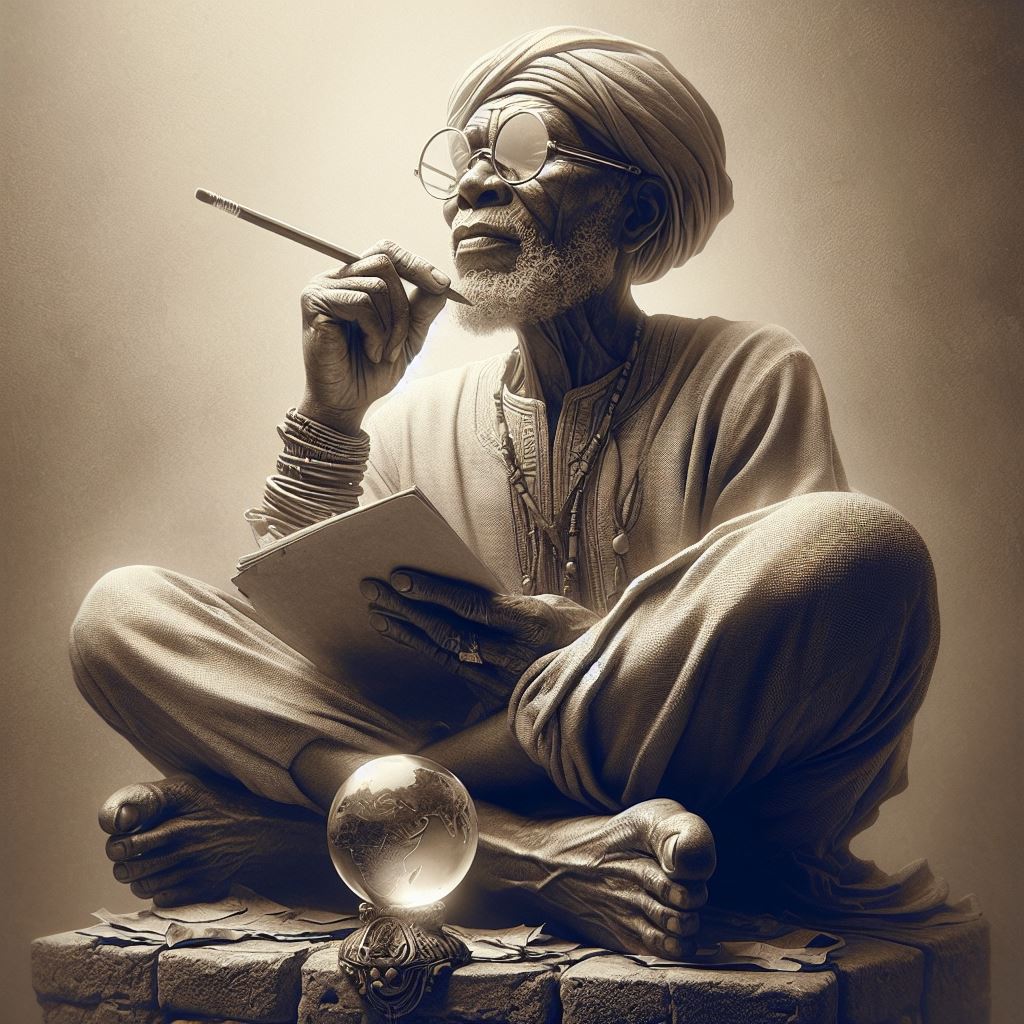
The Visionary. To me, a Visionary is someone who sees the entire picture at once and can intuit numerous, distinct ways of presenting it. As a writing professor in college put it, before you begin writing draft two of a story, you should reflect on the story within the story.

Is such-and-such really a short fiction about a home invader, or is it actually a story about a negligent father who suffers for not paying attention?

Also, consider the scenes we don’t get to see in a character’s life. There is the story the reader has privilege to experience, and then there are events that characters experience (for them in turtle-paced real time) but we don’t see or sometimes even hear about.

An example would be a story that chooses to show a character’s morning routine, their commute to work or school, a scene while their at work, and then it’ll skip to the next day, without showing their commute home or what they did that night.

And even if we got scenes in a character’s home, their commute, work/school, their commute back home, and dinner, those scenes take place within a few pages, not several hours like for us in the real world.

AI-Created with Microsoft Copilot

A Visionary looks at these reader-hidden details and can add them to a story to enhance it. A Visionary can alter or cut scenes. A Visionary is an excellent developmental editor. Essentially, a Visionary is one who practices the art of plotting, outlining, character creation, and theme.

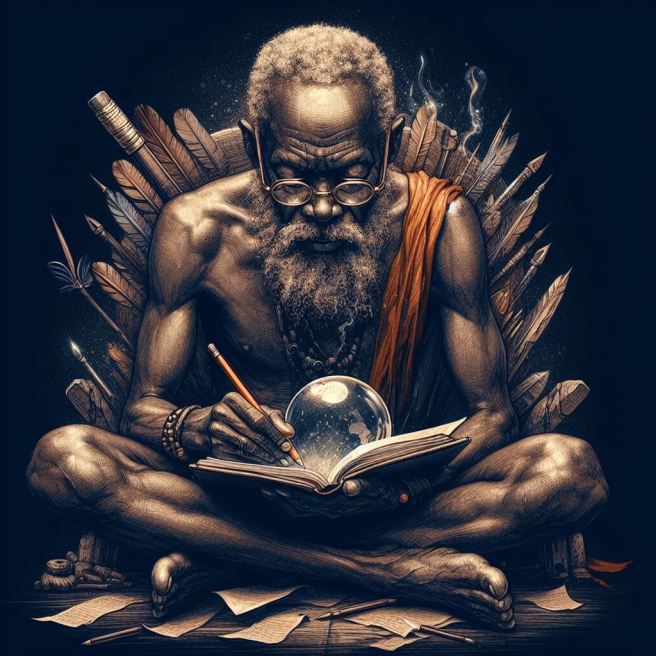
Visionaries are necessary for earth-shattering storytelling. A favorite example of mine is season 3 of the Marvel show Daredevil. Not only did each episode leave me hooked, but also the conclusion was unpredictable. I also felt this in the prison story arc in the novel “Live By Night” by Dennis Lehane.

AI-Created with Microsoft Copilot

The Visionary paints the most excellent blueprint. Elegant. Immaculate. But it is the Writer who assembles the conception. Brick by brick. Word by word. And while the Writer must scoot up close and only see pieces of the blueprint at a time, only the Writer can put the house together, can add the style. The literary devices. The sentence length.

An example would be the short stories and microfiction of Lydia Davis. They often have simple plots, but it’s her masterful sentences that makes readers chuckle or awe at her work.

To be a fiction writer, one must balance visionary thinking and granular thinking. Be sure to find joy in both.

Good Nouns Go a Long Way

Adjectives may be strong, but nouns are powerful. With a good noun, you can go an entire story with an adjective.

Adjectives are strong, but sometimes they can be weak. Take the phrases below for example:

“a funny guy”

“a guy who is funny

Both examples are helpful describg the noun (“guy”) but they are also flawed. In the first phrase, if the page cut off after the adjective “funny,” readers would be confused. A funny what? T-shirt? Song?

The second example shares this flaw. It uses an relative clause (“who is _”) which functions as an adjective, since it describes the noun. It’s a handy technique, but if the page cut off anywhere after “guy” and before “funny,” readers would be lost. Imagine if after the “is” was information that never again gets revealed in a story. The sentence could read: “A guy who is a fan of sentimental operas, though he tends not share this with others.” But readers would only see “a guy who is” and never be fufilled. Ah, the unaddressed suspense…!

Don’t get me wrong, adjectives are great. They can be excellent descriptors, with phrases like “a witty guy” or “a guy who has a wry sense of humor.” But they hold nouns back.

With a good noun in a phrase, you don’t need an adjective:

“A prankster

“A comedian

“An impressionist

In one word, a reader has learned information that previously required two words.

Whenever you’re revising your work, it’s always a good idea to look at the adjectives you’ve used and decide if they work good or if they could swapped out for a better noun. Happy writing, and seeya next time!

My Dream Creative Writing Club

When I was in Temple University, I was part of a campus lit mag called Hyphen. It published annually. Meetings were weekly, and anyone who attended was considered an editor, able to cast a vote for the acceptance or rejection of a piece. Pieces included art, poems, and short stories, and while editors could read in advance, time was given during each meeting to review a piece before casting a vote. Hyphen had a fun and simple formula, one fruitful for socializing and for keeping the creative juices fresh. The submissions we reviewed enlightened me on new ways to use prose, as did hearing the critiques from my fellow members. And the memes we’d share amongst each other? Priceless.

But even at the time, despite my love for Hyphen, I knew more could be done. For example, we could’ve had guidelines on how many of each submission type we’d accept. Regarding what got put in the magazine, we pretty much went with what got the most votes, and poetry was super popular; little room was left for short stories. We also could’ve had punctuation, formatting, and style guidelines, maybe even a word count, to keep pages visually consistent. At the end of the semester, once all the pieces are selected, editors transition from voting to grammar repair. Having a style guide would give editors more to do, more skills to practice, and also more to put on a resume.

But this is my dream club, right? So anything goes? Cuz I’d LOVE to have workshop sessions, for editors and potential submitters for their poetry, prose, and artwork submissions. Imagine a feedback and critique session, with the chance to submit again later on.

How about having themed issues of a lit mag? That would be cool. Open mic sessions to perform/practice poetry. Drawing sessions. Writing sprints.

Oo! Here’s a good one. Analyzing grammar in excerpts of prose or poetry, picking paragraphs apart for literary devices and syntax tricks like a ravaging grammar wolf🐺

There could even be sessions where we read short stories and analyzed them on the macro scale—plot, character, theme instead of writing style.

A writing club that combined all these things would be the best writing club ever. Who knows. Maybe I’ll be the one to start it…

So… Where Do Sentences Come From?

I’ve noticed something. When I’m writing, there are days when I feel invigorated—“Yes! Did you read that sentence?! I’ve got the magic touch!”—and there are days when I feel muddled—“Bah! I’m slogging through quicksand. The words just don’t sound right…”—but in either case, when I become self-aware of what I’m typing, or of the words I’m scribbling in my notebook, I ask myself: “How literally did I come up with that sentence? Like, literally, literally. (Not hyperbole literally.)”

How is my brain deciding which word to place next to the next word? There are a ton of synonyms for things. Why did my brain decide to write “It’s burning up in here” instead of “I’m burning up in here” or even “It’s too hot in here”? You might read those examples and think, “well, ‘it’s’ implies everyone’s hot while ‘I’m’ implies only the speaker is hot.” But on a conscious level, I’m not thinking of the differences at all. I have an idea that my character is sweating, and so my brain thinks of a sentence that I type onto the page. But what causes me to create one sentence and not another?

If you’re anything like me, I know what you’re gonna say, so let me stop you right there: no, the blanket statement “the subconscious mind” is not enough :P. I want to know the exact pathways of the subconscious, how the brain runs through its word binder and decides the best possible words for a situation. Or the worst words. Because the brain doesn’t give us the best sentences each go around. If it did, we wouldn’t need editors.

Unfortunately, dear readers, I am not a linguist. But as a writer and an avid grammar fan, I can recount the wonders of noticing how sentences are made, and I can speculate what it would be like if we had the power to always choose the right words.

The Art of Choosing Sentences

Here’s a helpful perspective: perhaps sentences being spoken or written unconsciously is a gift, in the same way breathing is done unconsciously. With both writing and breathing, some unknown part of us does the heavy lifting. I know I’m writing this sentence just as I know I’m breathing, but I’m not consciously doing focusing on each step. I’m not searching my brain for each individual letter, each logical part of speech, each word. All I have to do is stay on topic and the rest is guaranteed.

But in the same way manual mode with breathing allows us to meditate for calm or hyperventilate to psych ourselves up, taking conscious control over sentences allows us more flexibility, more power, and more possibilities in our prose. Take this sentence for instance: “The hat that you’re wearing looks nice.” This sentence is pretty straightforward. You might type it as a line of dialogue for a character and move forward, not giving it a second thought.

But when you do give things a second thought, you might find it outdoes the first. In the middle of typing a line of dialogue, you might pause and allow more noun and verb ideas to enter your head, or different pacings of the sentence, or unique tones of voice. You type a new sentence: “Nice hat you’ve got there,” but you want to know what else you’ve got. You toy around with it some more: “Wearing a nice hat there,” “Where can I get a hat like that?” You even go back to the original sentence but omit the “that”: “The hat that you’re wearing looks nice.”

Things get even more interesting when you factor in the different sentence types. The content of these two sentences is the same, but the order of the words changes your focus, and the use (or not) of a comma affects the cadence:

“Once I got home, I took out the trash” vs. “I took out the trash once I got home.”

In the former sentence, the crux of your attention is on the endpoint, taking out the trash, with the arrival home a backdrop to that action. The latter sentence’s focus is the reverse: we’re supposed to care about the arrival home, and the trash was just a sidenote of what happened there. Meanwhile, while writing about one of those two examples, we might consider the pacing of the sentences around it. If there are a lot of commas in a paragraph, we might choose the second variation since it lacks a comma—it would read faster, thus breaking up the pace. Likewise, in a paragraph of short, rapid-fire sentences, you’re better off with the comma version, which would give readers a chance to slow down.

These variations are by no means the end. We haven’t even factored in accents or slang! Just know, when you stop to reinvent a sentence—instead of using one as a mere tool—you can create something you’re truly proud of.

What If We Always Had the Right Words?

We all have ideas, but to articulate them? It’s tough. But imagine. Imagine writing a letter to your first crush that made them blush. Imagine writing a college essay with power words that hit like bricks and netted you a scholarship. Imagine writing a poem with the perfect rhymes, the imagery, and could convey your ideas seamlessly to listeners.

Here’s a fact about language speakers: we all more or less know our entire language. You have the same words as the president and a pop star. But the unique way each of us puts them together is what makes us, us. It’s why Chat-GTP can just mimic any person’s personality: it has access to all the words and all our unique patterns of speech, so mimicry is as easy as asking it to do so.

If we always had the right words? Well, I don’t think it would be so bad, actually. Actually, despite bringing up Chat-GTP, and I know for my fellow writers a fear may be aroused, of its neigh-inevitable snatching of our careers etc., I don’t think writing would become boring like AI prompts have become for me. (I mean, seriously, so what if it can write a description? Even if I got writer’s block and my own sentence came out sucky, at least I’d get a sense of accomplishment.)

If we always had the right words, it would be like becoming Usain Bolt. Do you think he got bored of running after he became the fastest man alive? Did he dive into a bowl of Cheetos and say “aight, I’m done now.” No! In fact, the fact that he’s excellent gives him more to work with. He can enjoy the moment of his sport and find new ways to perform—new challenges to do or places to sprint.

If we always had the right words, we would write beauty, frustration, curiosity. We would write about things we want to know and we would write about what we knew but had forgotten. We would write and feel accomplishment with each sentence, with each word. But allow me to backtrack. Because there are no right words.

Ever write a cover letter for a job? I know, I hate them too. When I write a cover letter, I often think about my word choice. It’s not enough for me to summarize where I’ve worked and why I want a new opportunity. To stand out from other job candidates, I have to write something compelling. I need a sentence that hooks the reader in immediately, and then I need sentences that can carry the momentum. A comma splice would break the magic.

And in my annoyance devising the perfect cover letter, I often think, “in all the parallel universes that may exist, some version of me has written the exact right words that the person reading this will want to hear, and that version of me is guaranteed the job.” But would it be the perfect cover letter? …No. Because someone else reading that same “perfect” cover letter may not like the writing style. Maybe the sentences are too short. And maybe a third person is okay with the sentences but may want more metaphors.

Sentence variation and metaphors are objective qualities. There’s no good or bad with them, only preferences— something that humans have. Plus, what one reader likes one day may be completely different another day, simply because of their mood.

The right words are the words that are right for you. And even that changes over time.

What are your thoughts on word choice in prose? Do you have an idea of how sentences are made? And what would you create if you could write “perfect” sentences? Tell me down below, and seeya next time 🙂
The Perfect Gift

“Dude: me and Karey, rappeling down a cliff, blasting Earth Wind & Fire out these speakers.”

“… and that’s your idea of a relaxing Valentine’s day?”

It was Shawn I was talking to, so I couldn’t be miffed at the reaction. A windy spring day, leaves loosed from trees brushed across his cheek or afro; his mouth remained agape. I rose from my reclined posture, patting my hands on my knees. He won’t win this lecture.

“We’ve been hiking like a bajillion times by now. She’s been saying it’s too easy, and she wants to ramp it up.”

“Really?” Shawn said. “She’s been with you hiking that much?”

“Yeah, we—”

“OK. Let’s say she has, pal of mine. She’s still. Scared. Of. Heights.” He made chopping scissor fingers and lowered his hand to the ground. “That’s you by the way. She’d push you off before going down herself.”

“She would not. She loves me.”

“And for what reason, I do not know.”

“Because I saved her life, I’m great at directions, I cook mean meatloaf.”

“Oh alright. You are a good cook at least. My wife’s been begging me to become your student. She still can’t get over those steaks…”

“Whoa-ho-ho! Has my guy finally left the souless salad side of vegetarianism?”

“Fat chance, moo murderer.”

“You’ll come around, someday,” I said. I turned to the corner and picked my new speakers off the bench. “Anyway, wise guy, what do you think I should do for Karey next week?”

“Anything that doesn’t involve those speakers. Unless you’re playing smooth jazz.”

“Yuck, that’s what she likes.” A woman walking by rolled her eyes as she passed me.

“Well if you’re tryna marry her someday you better get used to making sacrifices.”

“Yeah yeah.” I said and shrugged. But deep down I knew he was right. Karey and I started dating five years ago, and it took two years of friendly prodding for her to dip her toes into my lifestlye: I took her on her first hike. We’ve been on several since; she loves it. It would be rude of me to not give her world a try.

“Will that be the red or the white wine,” a waiter might ask us. I’d sweat profusely. What’s the difference? And you can’t say “I’ll take a beer” in the restaurants Karey likes.

“She’s been dealing with nasty costumers all week,” Shawn said. Her shoulders likely ache from hunching over at that receptionist desk all day. She needs… a massage. Or a sauna. Go with her, try both!”

“I dunno if I can sit still for so long while somebody’s touching me.”

“Make some jokes. She’ll be right next to you, you’ll forget about your surroundings.”

“What if I forget to hold in my farts?”

Shawn slapped both palms to his face. “Man, man, man… you’re hopeless.”